

Invisible Labour
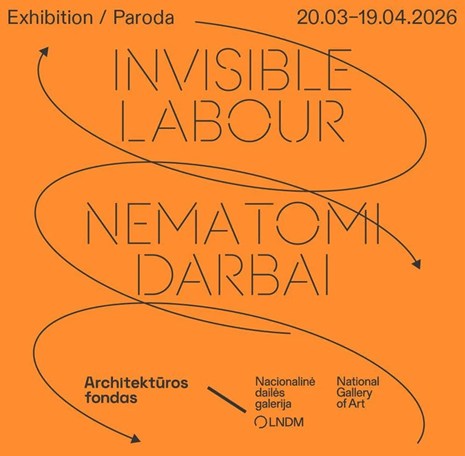
Invisible Labour
Electric cables and pipes buried underground, road workers in brightly coloured vests who paradoxically become invisible-these are the things we most often overlook, even though this very infrastructure sustains everyday life in the city. As long as the systems function smoothly, we rarely stop to think about them. Invisibility is not only material but also symbolic-cleaning, maintenance, and other works are most often carried out by socially vulnerable and marginalised groups. Yet it is precisely in this labour that quietly emerges one of humanity's fundamental traits, that is, the capacity to care for one another.
The second law of thermodynamics states that all systems move towards entropy, and so maintaining order within them requires a constant restorative input of energy. It is a force applied not to create something new, but to keep what already exists functioning. The concept of energy traces back to Aristotle, who defined energeia as the actualisation of potential, but its modern significance was largely shaped during the Industrial Revolution, alongside the development of thermodynamics. Societal breakthroughs enabled first by the steam engine and later by employing electricity not only transformed economic conditions but also fundamentally reshaped collective imagination. Energy came to be understood as an invisible yet measurable labour force that could be stored, exchanged, or transformed.
At the same time, work began to be seen as a value-producing
process conditioned by energy, capable of being performed not only
by humans or animals but also by machines.
In today's context of climate change and geopolitical tensions,
discussions about energy transition increasingly emphasise the
values of renewability, efficiency, and self-sufficiency. At the
same time, digital and artificial intelligence technologies promise
a post-labour society, while introducing new challenges, from
rising energy consumption to questions about a new social contract
in an age of automation.
Exhibition 'Invisible Labour' and accompanying event program invite an interdisciplinary exploration of these technological and social questions, through the lens of contemporary art and critical architecture. Across the exhibition, works reveal the interplay between imagery of energy and the mythology of everyday life, nostalgia for futurism, and witty systemic critique. Through their various formats, they offer experiences of phenomena that are often overlooked, yet fundamentally sustain our collective existence.
Here, a fragmentary narrative emerges, in which individual works come together in a polyphonic dialogue. As you follow the temporary drawings by the sun reflecting on the gallery walls, you are invited to reflect on the primary source of the world's energy and its significance in our everyday life and mythology. Next, following the satellites, visitors encounter upper-atmosphere phenomena, including flashes of electrical discharge.
Returning to the ground we rediscover electrification as a process once charged with the promise of romanticised progress, in which the urban environment and the bodies of its inhabitants became part of a coherent modernist choreography.
Caught in rhythmic vertigo, we are further led through the modern city and the systems that structure it, whose existence is most evident in public infrastructure, for instance, the city's lighting network. At the same time, the exhibition encourages us to perceive what remains in the shadows-beyond the grid and the bounds of representation. As we awaken our imagination, we can envision how our living environment might operate and appear if it were guided by principles of continual renewal and transformation.
Exhibition curator Martynas Germanavičius
Participating artists: Beatričė Mockevičiūtė, Deimantas Narkevičius, Emilija Povilanskaitė, Mindaugas Reklaitis, Pablo Encinas Alonso, Kipras Dubauskas, Justinas Dūdėnas, Lucille Leger, Jacques-Marie Ligot, Diāna Mikāne, Paula Veidenbauma, Eglė Šimėnaitė
Exhibition architect Artūras Čertovas
Exhibition coordinators: Eglė Juocevičiūtė, Goda Aksamitauskaitė
Exhibition technicians: Tauras Kensminas, Vytautas Narbutas
Exhibition architecture consultant Mindaugas Reklaitis
Graphic design: Nerijus Klumbys and Mantas Rimkus (taktika.studio)
Art program coordinators: Aistė Gaidilionytė, Kamilė Vasiliauskaitė
Exhibition communication Vilius Balčiūnas
Lighting and electricity Dominykas Bielunskis
Text translation and editing Martynas Galkus
Exhibition organiser Architektūros fondas
Exhibition partner National Gallery of Art of the LNMA
The exhibition is part of the European architecture platform LINA. The platform is co-funded by the European Union
The project is partially funded by the Lithuanian Council for Culture and the Vilnius City Municipality
Supporters: SODAS 2123, Radio Vilnius, Lynxmonadas, UAB Vilniaus apšvietimas, Institut Français de Lituanie
On 20 March at 18:30, we invite visitors to the exhibition opening at the National Gallery of Art, accompanied by a performance by Eglė Šimėnaitė.
On 21 March at 17:30, a guided tour of the exhibition will take place with its curator Martynas Germanavičius.
From 19-21 March, events from the performative programme will also take place at different locations across the city, including walks that invite participants to explore urban infrastructures, spaces and the systems that sustain everyday life.
Programme of Circular Design Symposium 'What Goes Around Comes Around'
